
How Is a Light Gauge Steel House Engineered for Different Wind and Snow Conditions?
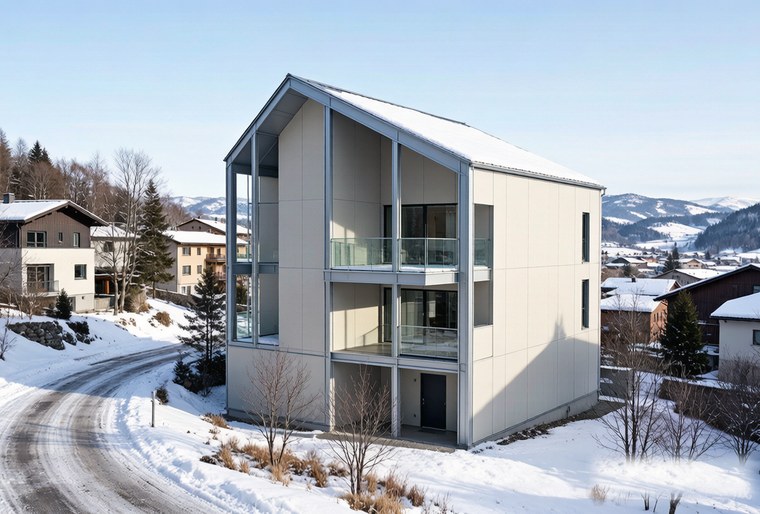
Why Local Loads Matter in Light Gauge Steel Housing
A light gauge steel house should not be designed around a single universal wind or snow rating. Structural requirements change by location, building height, roof form, exposure, surrounding terrain and local building regulations. A house in a sheltered inland area may require a different framing solution from a similar-looking house in a coastal, mountainous or high-snow region.
How Wind Affects the Structure
Wind can create pressure and suction on walls, roof surfaces, eaves and connections. For an LGS house, engineers may adjust stud spacing, member thickness, bracing, hold-down details, roof-to-wall connections and anchorage according to the design conditions.
Large openings also matter. Wide windows and doors can interrupt wall bracing lines, so the structural layout must coordinate architecture with the required load paths.
How Snow Affects the Roof
Snow design is not simply a question of adding stronger roof members. Roof slope, span, truss geometry, local snow accumulation patterns and potential drifting should all be considered. Depending on the project, roof truss spacing, member sections and connection details may need to change.
Project-Specific Engineering Is the Safer Approach
Buyers should be cautious when a supplier promotes one fixed wind, snow or seismic value for every house. A professional approach is to confirm the project location and applicable design criteria, then engineer the frame accordingly.
What Customers Should Provide
For an early review, provide the project location, building dimensions, storey count, preferred roof shape, window and door layout and any available local requirements for wind, snow and seismic design.
Eiffel Prefab Home develops cold-formed light gauge steel residential framing around project-specific requirements. Final structural calculations, member selection and connection details should be coordinated with applicable project codes and local approval requirements.